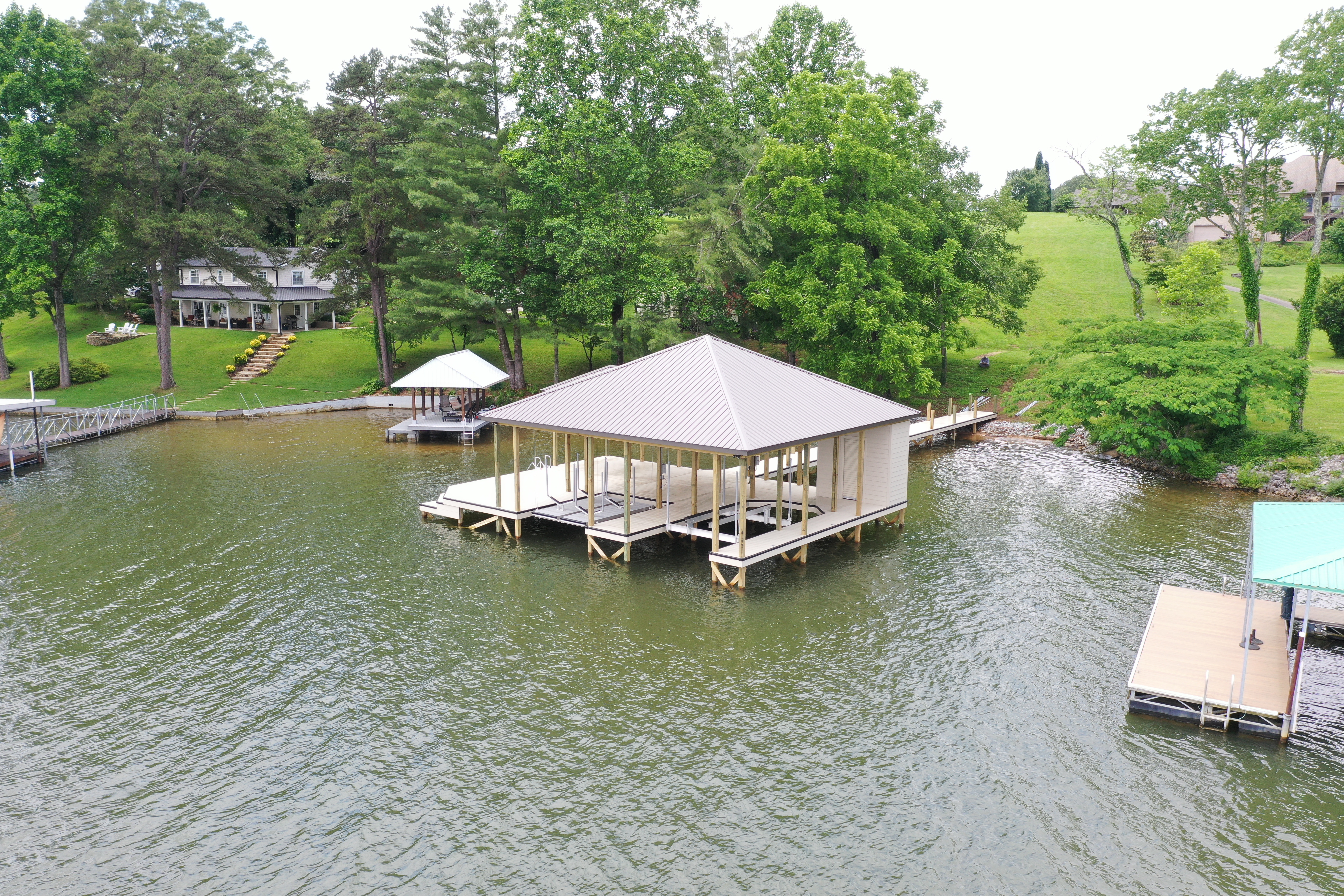
Riprap, seawall repairs, and bank reinforcement across East Tennessee lakes — for properties losing shoreline, washouts threatening existing docks, and full-scope waterfront construction projects.
Wave action, seasonal drawdown, freeze-thaw cycles, and wakeboat traffic all chew at the bank year after year. Left alone, an unstable shoreline takes the dock with it — loose posts, eroded approach paths, washed-out walkways, and ultimately a structural failure on the build above.
We stabilize existing shorelines around docks we’ve built and docks we haven’t, repair failing seawalls, and handle full waterfront construction projects from the bank line out. Every job gets the right approach for the property — riprap, seawall, hybrid, or rebuild.
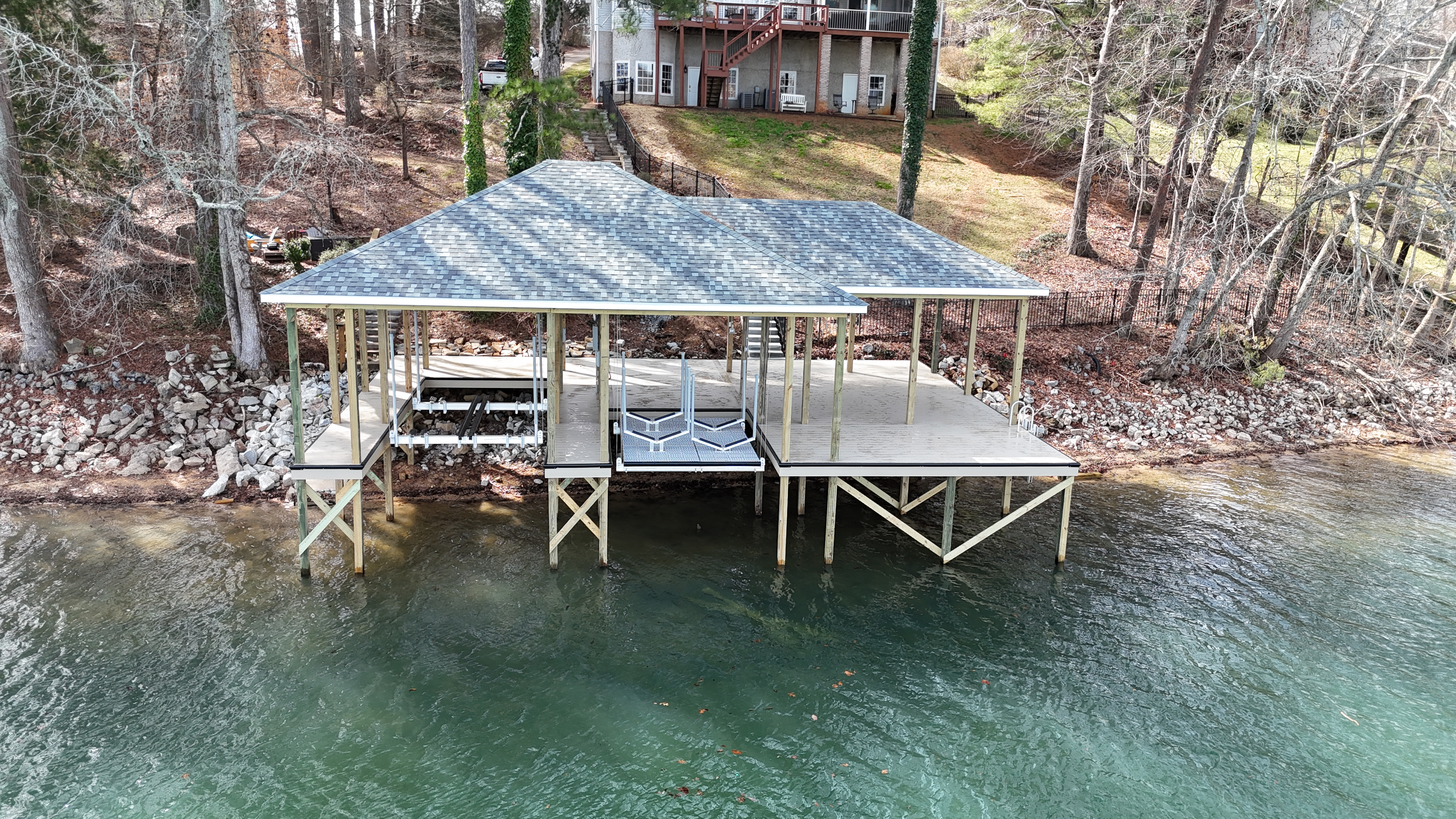
Most shorelines need one of these three approaches, or a hybrid of two. We’ll spec the right one on the site visit.
Graded stone placed along the bank line to break wave energy, hold soil, and protect the toe of the slope. The most common and most durable approach for residential shorelines on TVA reservoirs.
Repair, rebuild, or extend existing seawalls — concrete, vinyl sheet pile, or treated timber. Includes drainage relief, tie-back upgrades, and cap replacement when the wall stays in place.
Targeted stabilization around existing docks where shoreline is failing under the approach or around piles. Combines riprap, vegetation, and structural reinforcement to save the dock above.
When the shoreline work is part of a larger waterfront build, we handle it end-to-end — same crew, same barge, one project schedule. Pair shoreline stabilization with a new dock, a seawall, retaining structures, or property-side improvements.
Site visit, real assessment, real quote. Whether it’s a riprap touch-up or a full seawall rebuild, we’ll tell you what the property actually needs.
The early signs: visible erosion at the bank line, exposed roots, a step-down where the lawn meets the lake, loose stones rolling into the water, or movement around dock piles. If you’re losing more than an inch or two of shoreline a year, it’s time to look at it.
Yes — on any TVA reservoir, riprap placement falls under Section 26a. We file the application, manage TVA review, and don’t place stone until the permit is approved. Private lakes typically have lighter permitting.
Most residential riprap jobs finish in 2–4 days on site once the stone is delivered. Seawall rebuilds run longer — typically 2–3 weeks depending on length. Permit timing adds 3–6 weeks before the start date.
Absolutely. Most of our shoreline stabilization work is around existing docks — ours and other builders’. We’ll assess pile condition, approach path, and bank line and quote a fix.
Send photos if you can — bank line, dock approach, any visible erosion. We’ll come look within the week and put a real plan together.
We’ll reach out within one business day.